How personalised direct mail uses customer data, variable content and targeted messaging to create more relevant and effective campaigns.
Personalisation has changed what is possible with direct mail. Rather than sending exactly the same communication to every recipient, businesses can now use customer data to tailor everything from the name on a postcard to the products, offers, imagery and messaging that appear on it.
At its simplest, personalisation might mean addressing someone by their first name. At a more sophisticated level, a campaign could use information about a customer's previous purchases, interests, location or relationship with a business to create a completely different experience for different recipients.
The important thing is that effective personalisation isn't about using as much data as possible. It is about using the right information in a way that makes the communication more relevant to the person receiving it.
This guide explains how mail personalisation works, the different approaches businesses can take, how customer data is used and what you need to consider when planning a personalised direct mail campaign.
In this guide:
- What is mail personalisation?
- Why personalise direct mail?
- The different levels of personalisation
- What can you personalise?
- Using data to personalise direct mail
- Segmentation and personalised campaigns
- Variable Data Printing
- Personalised offers and promotions
- Personalised imagery and product recommendations
- Personalised QR codes and digital journeys
- Personalisation across different mail formats
- How to plan a personalised direct mail campaign
- Data quality, privacy and compliance
- Measuring personalised direct mail
- Common mistakes to avoid
- Mail personalisation checklist
- Frequently asked questions
1. What is mail personalisation?
Mail personalisation is the process of using information about a recipient to tailor the content of a direct mail communication. That information might include their name and address, but it can also include details such as previous purchases, product preferences, location, customer type or how long they have been a customer.
For example, a retailer could send a new customer a welcome offer, while an existing customer receives a loyalty incentive and a lapsed customer receives an offer designed to encourage them to return. Each person is receiving the same overall campaign, but the message has been adapted according to their relationship with the business.
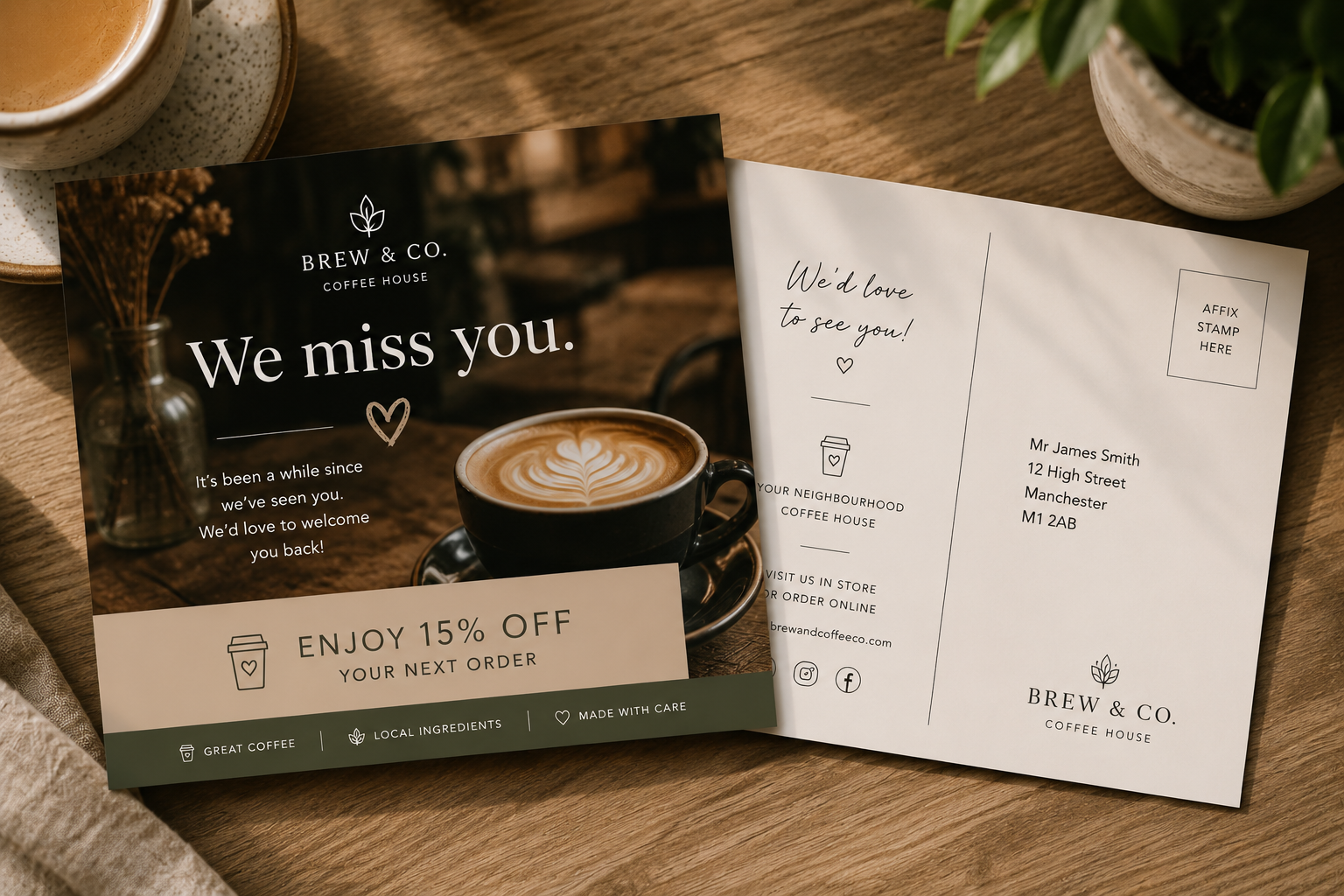
Personalisation can be applied to almost any type of direct mail, including postcards, letters, brochures, catalogues and larger mail packs. DMS also supports personalised direct mail as part of its wider mailing and production services.
The technology behind modern digital printing also means that personalised elements can be produced at scale. Instead of creating every piece of artwork manually, a campaign can be set up so that specific elements automatically change according to the recipient's data.
2. Why personalise direct mail?
The main advantage of personalisation is relevance. A generic piece of marketing has to work for everyone who receives it, whereas a personalised communication can be designed around the recipient's circumstances, interests or relationship with the brand.
A simple example would be a fashion retailer sending the same postcard to its entire database. Everyone sees the same products and the same offer. With personalisation, the retailer could instead feature different products according to each customer's previous purchases or interests, while changing the offer depending on whether the recipient is a new, active or lapsed customer.
This doesn't mean that every element of the communication needs to be different. In many cases, a small amount of well-considered personalisation can make a significant difference to how relevant the campaign feels.
The most effective campaigns therefore start with a simple question: what information do we have that could make this message more useful to the person receiving it?
3. The different levels of personalisation
Personalisation isn't an all-or-nothing approach. Businesses can choose how sophisticated they want their campaigns to be depending on their objectives, available data and budget.
Basic personalisation
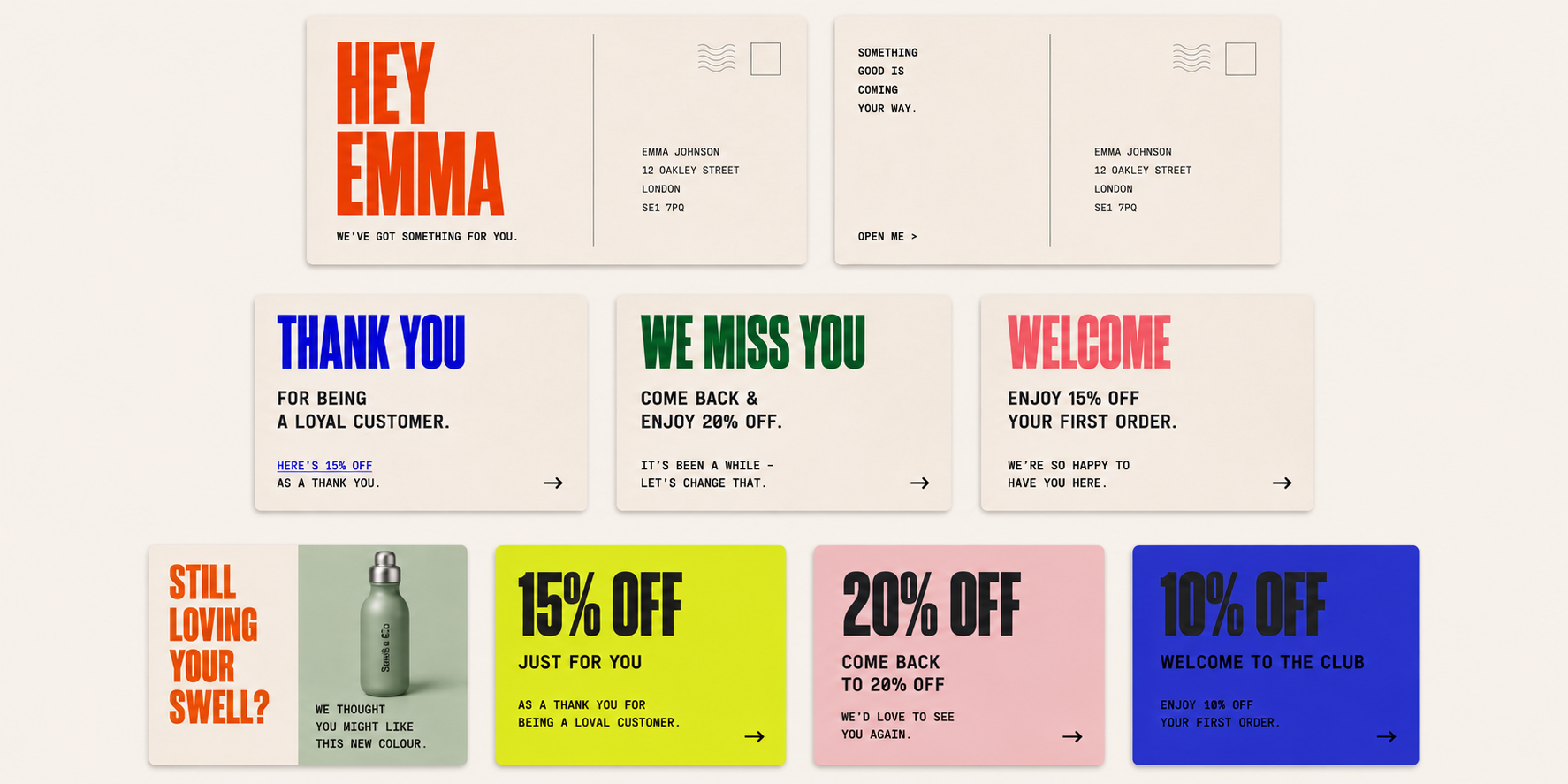
The simplest approach is to personalise the recipient's details. This could be as straightforward as changing a headline from:
We've got something for you.
to:
Emma, we've got something for you.
The rest of the communication remains the same, but addressing someone directly can make the piece feel more individual.
Segmented personalisation
The next level is to create different versions of a campaign for different customer groups. Rather than treating everyone in the database in exactly the same way, recipients are divided into meaningful segments.
For example: a retailer might send:
New customers → A welcome offer
Existing customers → A loyalty promotion
Lapsed customers → A reactivation offer
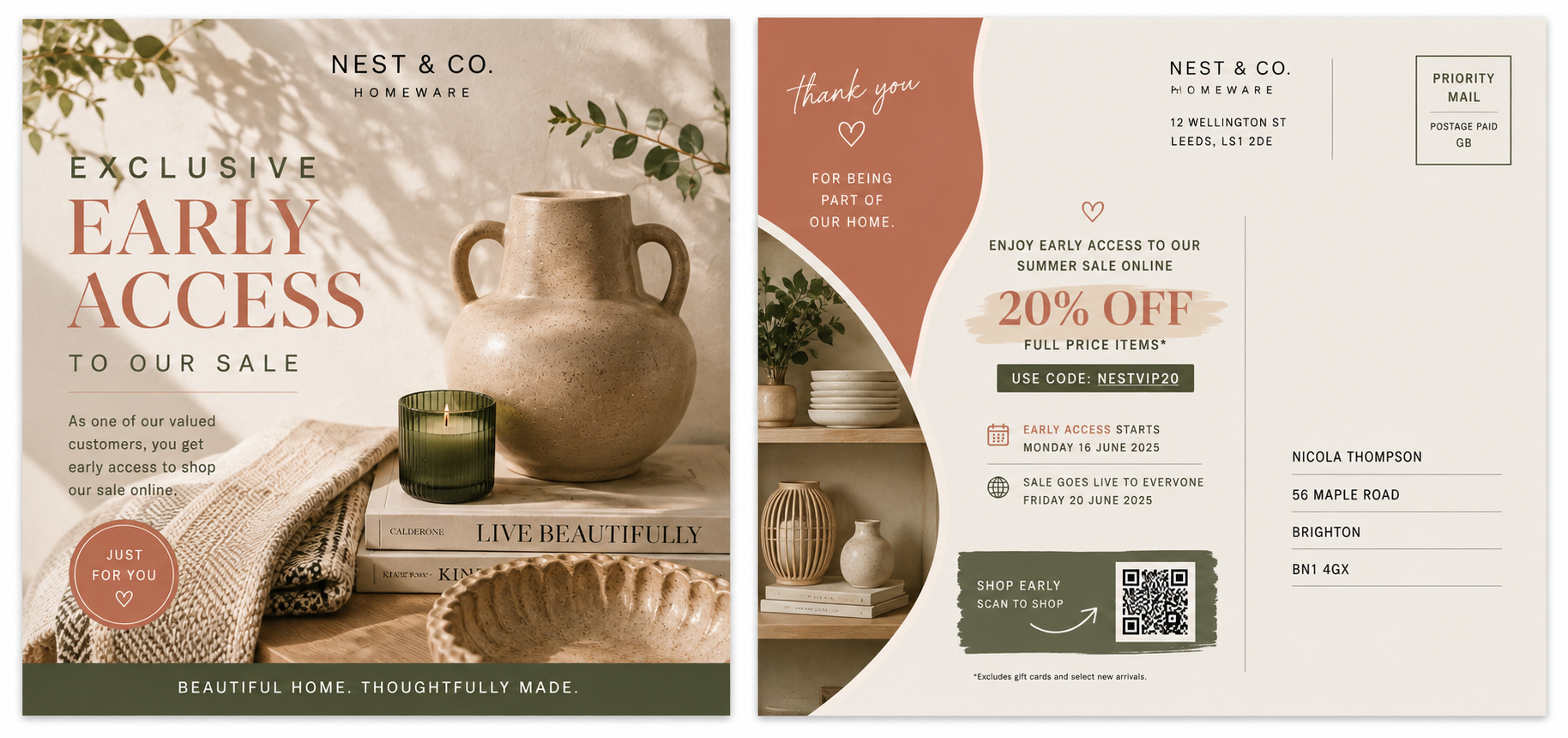
VIP customers → Exclusive early access
The overall campaign can still have a consistent visual identity, but the message and offer are adapted according to the recipient's relationship with the business.
Behavioural personalisation
Behavioural personalisation uses information about how someone has interacted with a business to influence what they receive.
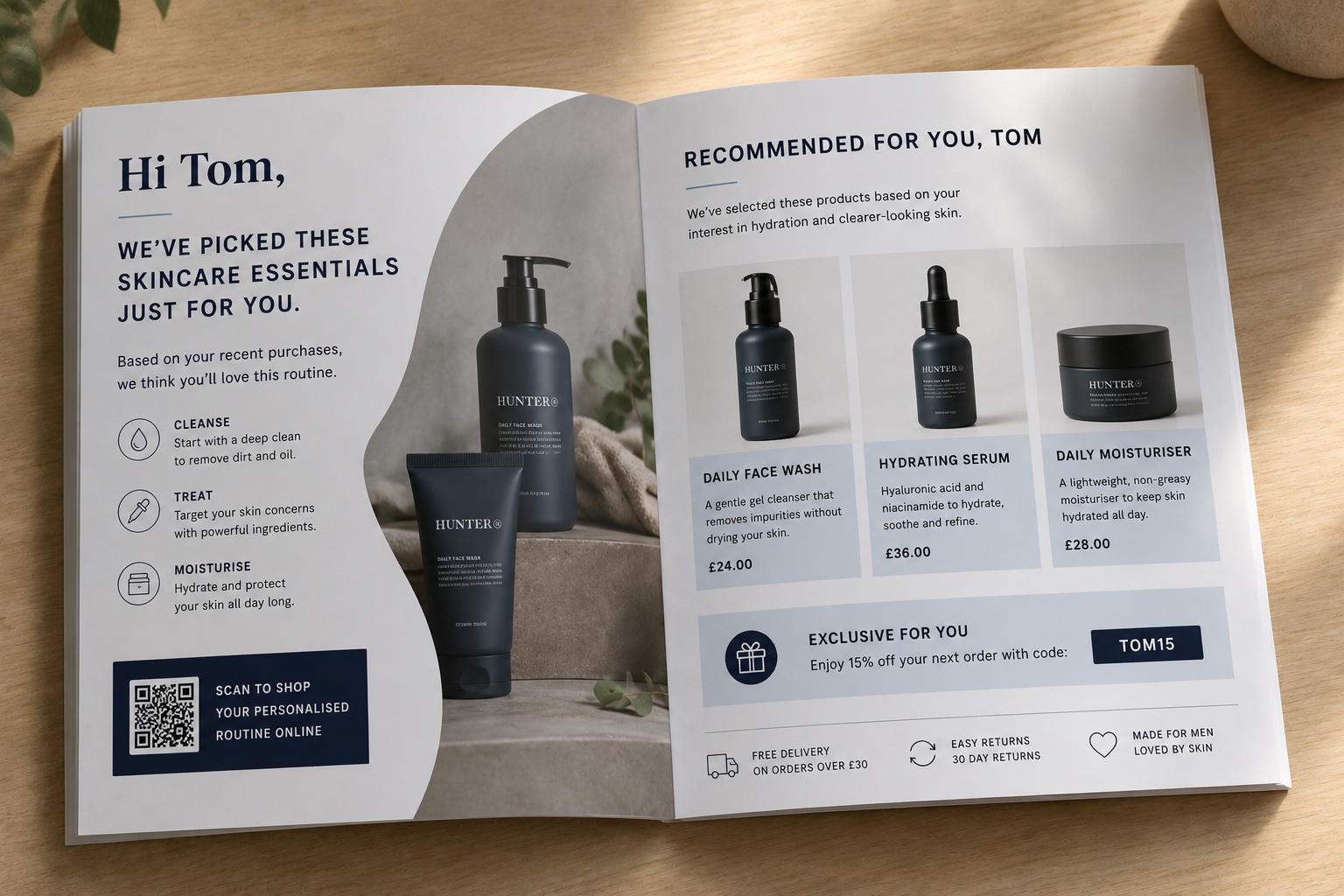
For example: a skincare brand could identify that a customer has previously purchased a cleanser and send them a postcard featuring complementary moisturisers and serums.
This makes the communication more relevant because the products being promoted have a clear connection to the customer's previous behaviour.
Product personalisation
Product personalisation takes this approach further by changing the actual products or imagery featured in the communication.
For example: A fashion retailer could show different clothing collections to customers based on the categories they regularly purchase, while a homeware brand could feature different products according to previous purchases.
This can be particularly effective for catalogues, brochures and product-led postcards where imagery plays an important role in the campaign.
Offer personalisation
Offers can also be tailored according to customer behaviour or value.
For example: a business could offer a new customer 10% off their first order, a lapsed customer 15% off to encourage them to return, and a high-value customer early access to a sale.
The important point is that the offer has a reason behind it. Instead of simply giving everyone the same discount, the campaign uses customer information to determine which incentive is most appropriate.
One-to-one personalisation
At the most sophisticated level, multiple elements can be personalised for each recipient. The name, message, imagery, product recommendations, offer, promotional code and QR code could all potentially change from one piece of mail to another.
Modern digital printing and variable data technology make this type of campaign possible without having to manually create every individual piece. DMS's digital printing service specifically supports variable data and personalised print.
4. What can you personalise?
There are many different elements that can be changed within a personalised direct mail campaign. The right combination will depend on the objective of the campaign and the data available.
Names & addresses
The most basic form of personalisation is using the recipient's name and address. This is particularly useful for creating a direct, one-to-one tone.
Headlines & messaging
Different customer groups can receive different headlines or messages. A new customer might see a welcome message, while a lapsed customer receives an invitation to return.
Offers
Discounts, promotions and incentives can be varied according to customer type or behaviour.
Product recommendations
Products can be selected according to previous purchases, browsing behaviour or stated preferences.
Imagery
The images featured on a mailer can also be changed. This can allow a retailer, for example, to showcase the product categories that are most relevant to each recipient.
Promotional codes
Unique or segment-specific codes can be used to both personalise an offer and track its performance.
QR codes and URLs
Individual recipients or customer groups can be given different QR codes or URLs, taking them to specific landing pages or online offers.
The possibilities are extensive, but good personalisation is usually selective. Changing everything simply because you can doesn't necessarily make a campaign better.
5. Using data to personalise direct mail
Data is the foundation of personalised direct mail. The quality of the finished campaign depends heavily on the quality of the information used to create it.
Customer databases can contain a huge amount of useful information, including names and addresses, purchase history, location, customer value, product preferences and previous campaign interactions. The challenge is identifying which information is genuinely useful for the campaign and ensuring that it is accurate before production begins.
For example, if a campaign is designed to target customers who haven't purchased for six months, the database needs to be able to identify those customers accurately. If a retailer wants to recommend products based on previous purchases, the purchase data needs to be correctly matched to each recipient.
Before a campaign goes into production, data may therefore need to be cleaned, checked, formatted and segmented. DMS provides data processing services that include cleansing, deduplication, address improvement and other data preparation processes designed to improve accuracy and deliverability.
Good data preparation isn't simply an administrative exercise. It helps prevent incorrect personalisation, reduces wasted mail and gives businesses greater confidence that the right communication is reaching the right person.
6. Segmentation & personalised campaigns
Segmentation is often the starting point for a successful personalised direct mail campaign. Rather than trying to create a completely different piece of mail for every individual, businesses can divide their audience into groups that share particular characteristics or behaviours.
A simple campaign might separate customers into new, active and lapsed customers. A more sophisticated campaign could use purchase history, geographic location, customer value or product preferences to create more specific groups.
For example:
- A coffee shop with several locations could create different versions of a postcard for customers living near each branch.
- A fashion retailer could divide its audience according to the types of products they purchase, while
- A subscription business could create different messages for customers at different stages of their customer journey.
The benefit of segmentation is that it provides greater relevance without necessarily making the campaign unnecessarily complicated. Each group can have its own message, imagery or offer while still forming part of one cohesive campaign.
Start segmenting your audience with clean, accurate data. View our data processing services here >
7. What is Variable Data Printing?
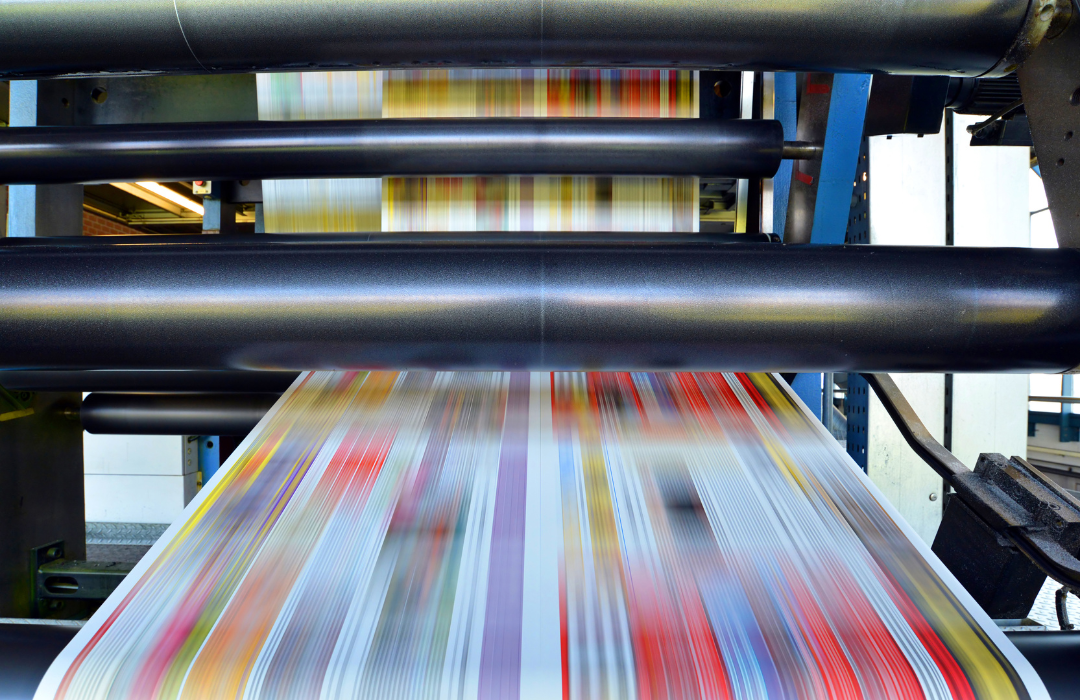
Variable Data Printing, often abbreviated to VDP, is a printing process that allows individual elements of a printed piece to change from one recipient to another.
Rather than printing 10,000 identical postcards, for example, a business can provide a single campaign design alongside a data file containing the information that needs to change.
The finished campaign could therefore contain:
Recipient 1: Emma – 15% off skincare
Recipient 2: James – 10% off men's grooming
Recipient 3: Nicola – Early access to the new collection
The core design remains consistent, but the variable elements are automatically incorporated during production.
DMS's digital printing capabilities are particularly suited to variable data campaigns, as digital printing allows text, images and other elements to be changed without the need for traditional printing plates.
Variable data printing can be used for relatively simple campaigns, such as changing a recipient's name, or much more complex communications where multiple elements change according to customer information.
8. Personalised offers & promotions
Offers are one of the most straightforward ways to make a direct mail campaign more relevant. Rather than giving every recipient the same promotion, businesses can use customer information to determine which incentive is most appropriate. This could be based on customer lifecycle, previous spending, purchase frequency or other relevant information.
For example:
| Customer group | Example offer |
|---|---|
| New customer | 10% off first order |
| Existing customer | 15% off next purchase |
| Lapsed customer | 20% off to return |
| VIP customer | Early access to sale |
Personalised offers can also be combined with unique promotional codes. This not only gives the recipient a clear reason to respond but can help the business identify which version of the campaign generated the resulting sale or enquiry.
For a campaign to be effective, however, the offer should make sense within the wider customer relationship. A personalised promotion should feel like a relevant reason to act, rather than simply a different discount assigned to each person.
9. Personalised imagery & product recommendations
Personalisation doesn't have to be limited to text. Images and product recommendations can also be adapted according to the recipient's interests or previous behaviour. This can be particularly valuable for businesses with large product ranges, where showing every customer the same selection may mean that much of the content isn't relevant to them.
Imagine a beauty brand that knows a customer regularly purchases skincare products. Instead of sending a general catalogue featuring make-up, haircare and fragrance, the brand could give greater prominence to skincare products and complementary recommendations.
The same principle could apply to fashion, homeware, food, travel or any business with distinct product categories.
Digital printing makes it possible to incorporate variable images and copy into the same overall campaign, allowing businesses to produce highly targeted communications while maintaining a consistent brand identity.
10. Personalised QR codes & digital journeys
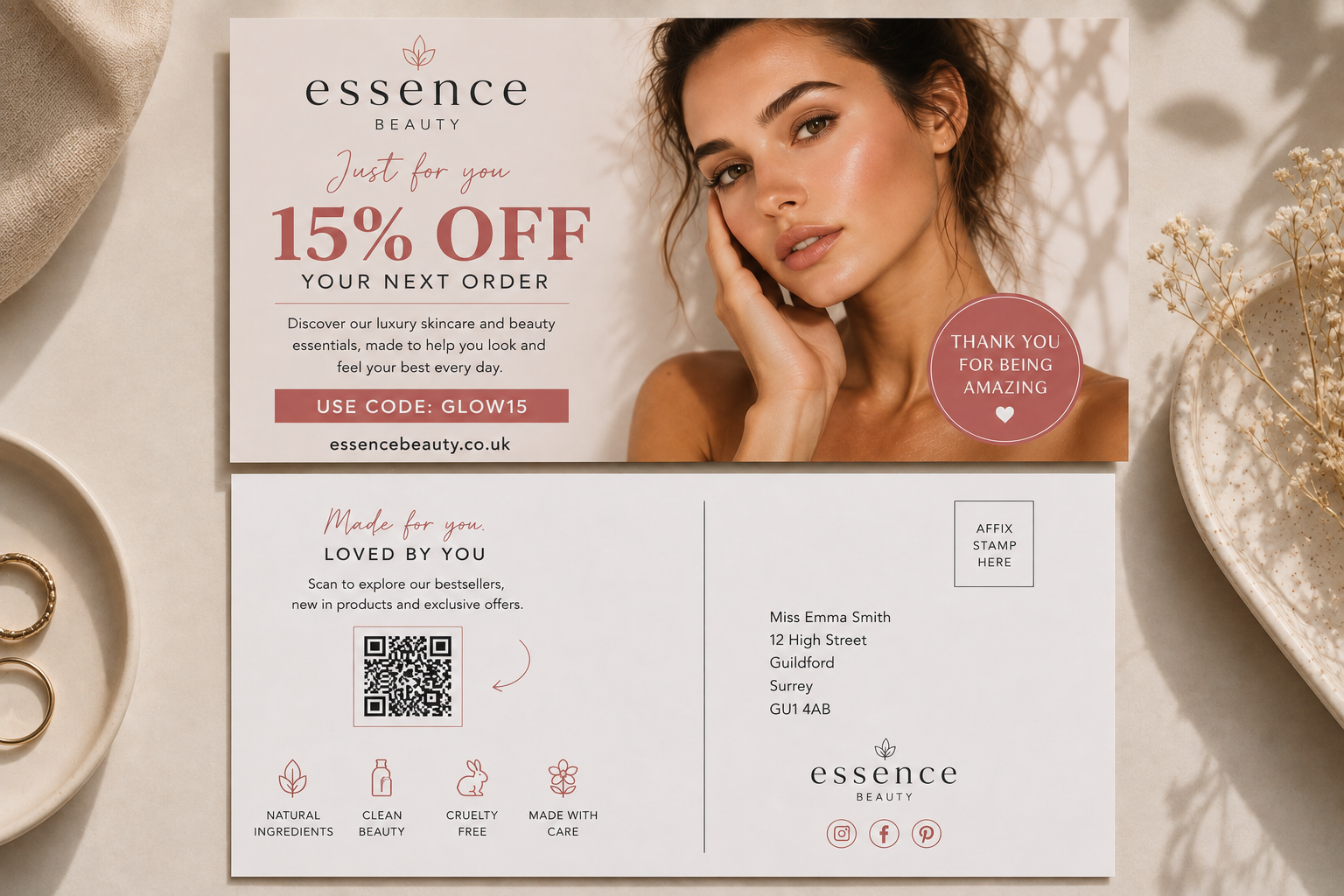
Personalised direct mail can also connect the physical and digital parts of a campaign. A QR code provides a simple way for a recipient to move from a printed communication to a website, landing page, offer or other digital experience. When the QR code itself is personalised, the business can create an even more targeted journey.
For example, a customer might receive a postcard saying:
Emma, your early access starts now.
The QR code could then take Emma directly to a page featuring the products included in her offer.
This creates a more connected experience than simply sending every recipient to the company's homepage. It can also make campaign measurement easier by allowing businesses to track scans and subsequent online activity.
QR codes can be used to direct customers to product pages, online offers, event registration pages, appointment booking systems or personalised landing pages. The key is to make the digital destination consistent with the message on the mailer. If the postcard promises a personalised offer but the QR code simply leads to a generic homepage, some of the value of the personalisation is lost.
11. Personalisation across different mail formats
Personalisation can be incorporated into almost any type of direct mail, so the format should be chosen according to the amount of information you need to communicate and the type of response you want to generate.
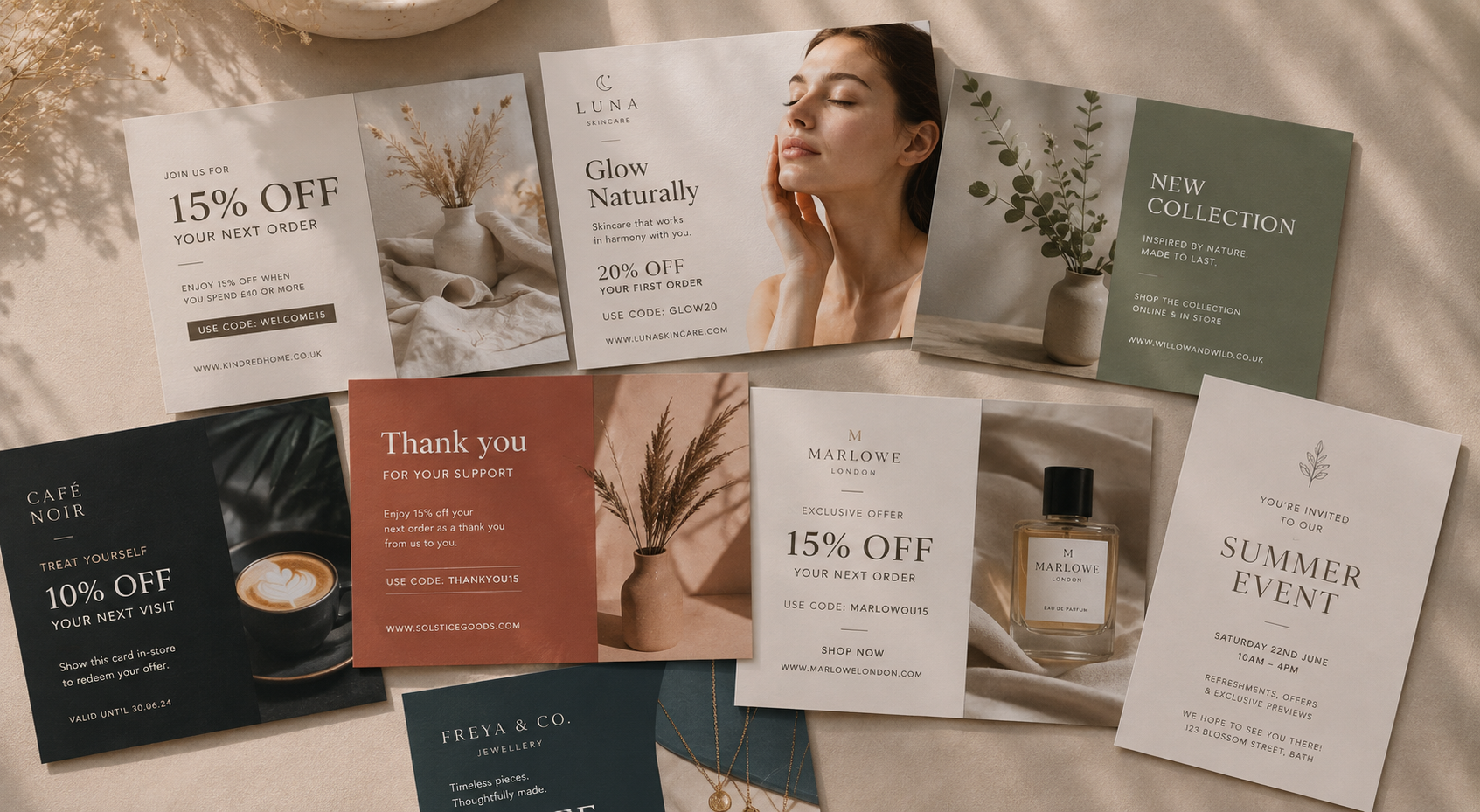
Postcards
Postcards are particularly effective when the message is simple and visual. Names, offers, imagery, QR codes and promotional messages can all be personalised.
View our Postcard Marketing Services →
Letters
Letters provide more space for personalised messaging and are useful when the campaign needs to explain an offer, provide detailed information or create a more one-to-one communication.
Brochures & catalogues
These formats provide more room for product recommendations and personalised content, making them useful for retailers and businesses with larger product ranges.
Find out more about how we print our brochure & catalogues →
Flyers
Flyers can be personalised by audience, location, offer or customer type and are particularly useful for targeted local campaigns.
Mail packs
A personalised postcard, letter, brochure and promotional insert can be combined into a larger mail pack where multiple elements work together.
Product sampling
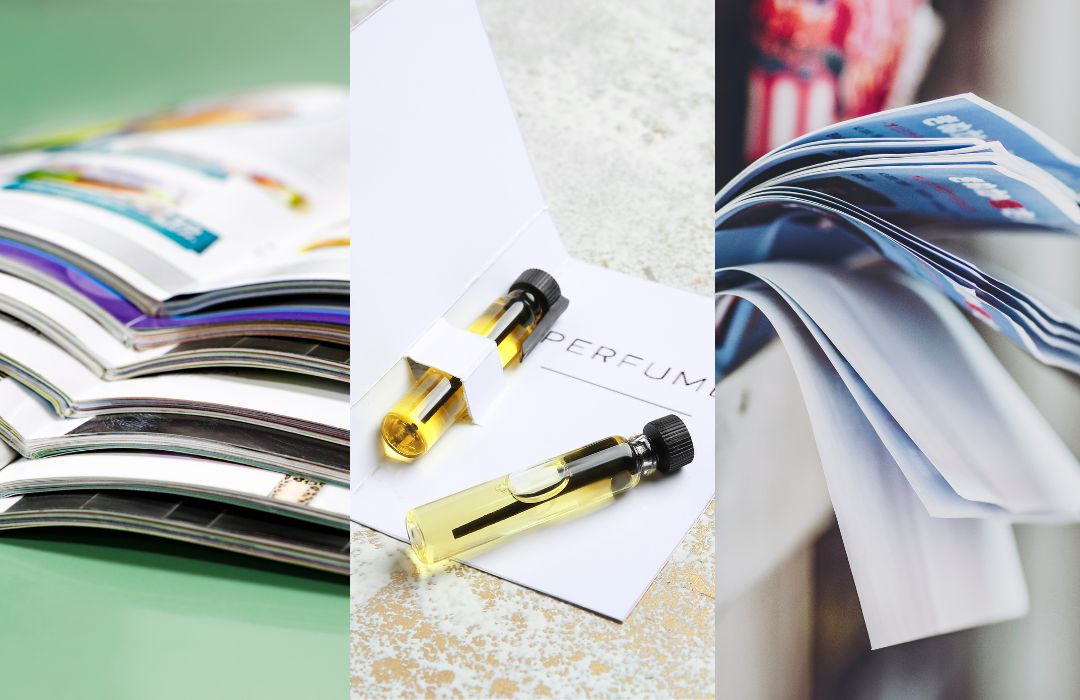
A personalised piece of mail can also form part of a promotional pack containing a physical product sample. For example, a beauty brand could send a personalised postcard alongside a fragrance or skincare sample, combining a physical product experience with a targeted message.
Discover all our direct mail sampling services, from home sampling, event sampling and more →
At DMS, we also provide a range of mailing, fulfilment, printing and wrapping capabilities to support different types of direct mail campaigns.
12. How to plan a personalised direct mail campaign
The most effective personalised campaigns are planned around the customer and the campaign objective, rather than starting with the question of what information can be personalised.
Start with the objective
Begin by deciding what you want the campaign to achieve. You might be trying to generate sales, reactivate lapsed customers, introduce a new product, increase store visits, generate enquiries or strengthen customer loyalty.
Once the objective is clear, it becomes much easier to determine which customers should receive the campaign and what information will actually be useful.
Define your audience
Next, identify who you want to reach. This could be your entire customer database or a much smaller group, such as customers who purchased within the last three months, people living within a particular postcode area or customers who have not purchased recently.
Decide what you want to personalise
Think about which elements will make the biggest difference. You might decide to personalise the name and offer, or you may want to go further by changing the imagery, products, QR code and landing page as well.
The aim should be to create meaningful personalisation, rather than simply changing elements because the technology allows you to.
Prepare the data
Once you know what information you need, your database can be prepared for production. This might involve cleaning records, removing duplicates, standardising addresses and creating the required customer segments.
Don't forget about cleaning your data before you start!
Develop the creative
The creative should be designed with personalisation in mind from the beginning. It needs to allow variable elements to change while ensuring that every version remains visually consistent with the brand.
Test the campaign
Before production, test multiple versions of the mailing. Check that names, addresses, offers, imagery, QR codes and other variable elements are appearing correctly. This stage is particularly important for complex campaigns where several different pieces of information are changing.
Print & produce
Once everything has been approved, the campaign can move into production. DMS offers both digital printing and laser printing for both smaller and larger volumes, with digital technology particularly suited to campaigns requiring variable data.
DMS also provides a full print management service. Find out more here >
Prepare & send the mailing
The finished pieces can then be addressed, sorted and prepared for distribution. For larger campaigns, using a bulk postage service can help manage the postal process and access more cost-effective postage rates.
Measure the results
Finally, measure the campaign against its original objective. Unique promotional codes, QR codes, URLs and response mechanisms can all help establish which recipients responded and which version of the campaign performed best.
13. Data quality, privacy & compliance
Because personalised direct mail relies on customer information, data quality and responsible data management need to be considered throughout the campaign. Poor-quality data can result in incorrect names, inaccurate addresses, duplicate mailings or irrelevant recommendations. These errors can waste money and, more importantly, undermine the credibility of the campaign.
Data should therefore be checked and cleaned before it is used for production. DMS's data processing services include identifying duplicate records, improving address accuracy and other cleansing processes designed to improve the quality of mailing databases.
Businesses also need to make sure that their use of personal information for direct marketing complies with applicable data protection and privacy requirements, including UK GDPR and the Data Protection Act 2018 where relevant.
Personalisation should also be handled with care from a customer-experience perspective. Just because a business has access to a particular piece of information doesn't necessarily mean that it should use it in a mailing. The best campaigns use data in ways that feel helpful and relevant rather than intrusive.

14. Measuring personalised direct mail
A personalised campaign should be measurable in the same way as any other marketing activity. Before the campaign launches, decide what success looks like and establish how you will track it.
Depending on the objective, useful measures could include response rate, offer redemption, QR code scans, website visits, enquiries, purchases, revenue and return on investment.
For example: a retailer could give different customer groups unique promotional codes and compare the redemption rate between them. Alternatively, a campaign could use personalised QR codes to measure how many people scanned their mailer and what they did after arriving on the website.
It can also be useful to compare personalised mail with a control group receiving a more generic version. This allows the business to establish whether the additional personalisation actually improved the campaign's performance.
The most important point is to connect the measurement back to the original objective. If the campaign was designed to reactivate customers, look at how many previously inactive customers returned. If the goal was to drive online sales, measure the revenue generated rather than simply counting how many mailers were sent.
15. Common mistakes to avoid
Personalising only the name
Adding someone's first name can make a piece of mail feel more personal, but it doesn't necessarily make the overall communication more relevant. Where useful data is available, consider whether the offer, product recommendations or message could also be tailored.
Using poor-quality data
Incorrect information can have the opposite effect to what you intended. A wrongly spelled name, outdated address or irrelevant product recommendation can quickly make a supposedly personalised communication feel automated.
Making the campaign unnecessarily complicated
Not every campaign needs dozens of variable elements. Sometimes a personalised message and relevant offer will achieve more than an overly complicated piece of creative.
Forgetting the digital journey
If a personalised postcard sends everyone to the same generic landing page, the online experience may feel disconnected from the physical communication. Where appropriate, consider how the digital journey can reflect the personalisation used in the mailer.
Over-personalising
There is a point where personalisation can begin to feel intrusive. Consider whether the information you're using genuinely improves the communication and whether the recipient would reasonably expect the business to use it in that way.
Failing to test
Always test multiple versions before production. A campaign can look perfect in the original artwork while containing errors once the variable data has been applied.
Not measuring the results
Without tracking, it's difficult to know whether personalisation made a meaningful difference. Build measurement into the campaign from the beginning rather than trying to work out the results afterwards.

16. Mail personalisation checklist
Use this checklist when planning your next personalised direct mail campaign.
Strategy
- Define the objective of the campaign
- Identify the target audience
- Decide what action you want recipients to take
- Determine how personalisation can support that objective
Data
- Identify the data you need
- Clean and validate the database
- Remove duplicate records
- Check address accuracy
- Create customer segments
- Check relevant data protection and marketing requirements
Personalisation
Decide which elements will change, such as:
- Recipient name
- Message
- Headline
- Offer
- Product recommendations
- Images
- Promotional codes
- QR codes
- URLs
Creative
- Create the core campaign design
- Allow space for variable content
- Establish the rules for each customer segment
- Check that all versions remain on-brand
- Make sure personalised content doesn't compromise readability
Production
- Confirm print specifications
- Test variable data
- Proof multiple personalised versions
- Check QR codes and URLs
- Approve final artwork
- Confirm quantities and production requirements
Mailing
- Prepare final mailing data
- Confirm addressing
- Check postage requirements
- Arrange postage and distribution
- Schedule the campaign
Take a look at all our postage services, from bulk postage to mail discounts >
Measurement
- Set up unique promotional codes where appropriate
- Track QR code scans
- Use dedicated URLs or landing pages where useful
- Monitor responses and conversions
- Measure revenue generated
- Calculate campaign ROI
- Compare different customer segments or campaign versions
Frequently Asked Questions
What can be personalised on direct mail?
Almost any variable element can potentially be personalised, including recipient details, headlines, offers, product recommendations, imagery, promotional codes, QR codes and URLs. The specific options will depend on the campaign and the printing process being used.
Does personalised direct mail have to use the recipient's name?
No. A name is one of the simplest forms of personalisation, but more sophisticated campaigns can tailor the message, offer, products or imagery according to customer information.
Can postcards be personalised?
Yes. Postcards can be personalised with recipient names, offers, messages, imagery, QR codes and other variable information. DMS offers postcard printing and production as part of its direct mail services.
What is Variable Data Printing?
Variable Data Printing is a digital printing process that allows elements of a printed communication to change according to the recipient's data. It can be used to change text, imagery, offers and other elements within the same campaign. DMS's digital printing service supports variable data printing.
Can personalised direct mail include different images?
Yes. Variable printing can be used to change imagery as well as text, allowing different recipients or customer segments to see different products, photographs or creative.
Can QR codes be personalised?
Yes. QR codes can be incorporated into personalised mail campaigns and can be used to send recipients to specific products, offers, landing pages or other online destinations.
Is personalised direct mail more expensive?
The cost will depend on factors such as the volume of mail, complexity of the personalisation, data processing requirements, print specification and postage. Digital printing can be particularly useful for personalised campaigns because it allows variable content to be produced without the traditional setup associated with some other printing processes.
How do you personalise direct mail at scale?
Personalised campaigns are produced by combining customer data with variable content rules. Digital printing technology can then use that information to produce the appropriate version for each recipient or customer segment.
What types of businesses use personalised direct mail?
Personalised direct mail can be used by almost any organisation with a customer or prospect database. Retailers, hospitality businesses, charities, financial services companies, property businesses, local businesses and B2B organisations can all use personalisation to make their campaigns more targeted.
Can personalised direct mail be combined with digital marketing?
Yes. Combining personalised mail with QR codes, personalised landing pages, email, ecommerce and other digital channels can create a connected customer journey between physical and digital marketing.
Make your direct mail more personal
Personalised direct mail gives businesses an opportunity to make physical marketing feel much more relevant to the individual receiving it. Rather than relying on a single message for an entire audience, customer data can be used to create communications that reflect different customer needs, behaviours and relationships with a brand.
The most effective approach isn't necessarily the most complicated one. A well-chosen customer segment, relevant offer and carefully personalised message can often achieve more than a campaign where every possible element has been changed.
The process starts with good-quality data and a clear objective, before moving through creative development, personalisation, printing, production and postage. With the right approach, businesses can create targeted direct mail campaigns at scale while maintaining a consistent and professional brand experience.